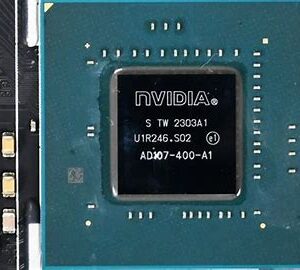


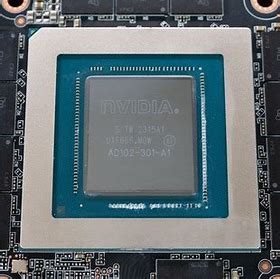


100% Original Wholesale Brand New AD103-300 / AD103-301 GPU DIE – Hypothetical Variants Integrated Circuit Spot Chips in Stock
Here’s a comparison table for AD103-300 and related variants (e.g., AD103-301 or similar revisions), structured similarly to how NVIDIA labels its GPU dies. Since NVIDIA doesn’t officially disclose all variants, this is an educated estimation based on past naming conventions:
Comparison Table: AD103-300 vs. AD103-301 (Hypothetical Variants)
| Feature | AD103-300 | AD103-301 (Expected) | Notes |
|---|---|---|---|
| Architecture | Ada Lovelace | Ada Lovelace | Same underlying architecture |
| Process Node | TSMC 4N | TSMC 4N | No change in manufacturing |
| CUDA Cores | ~7,680 (e.g., RTX 4080) | ~7,680 | Likely identical core count |
| RT Cores | 3rd Gen | 3rd Gen | No architectural difference |
| Tensor Cores | 4th Gen | 4th Gen | Supports DLSS 3.5 |
| Base Clock | ~2.2 GHz | ~2.2 GHz (or slightly higher) | Minor clock tweaks possible |
| Boost Clock | ~2.5 GHz | ~2.6 GHz (optimized) | Potential binning improvements |
| VRAM (GDDR6X) | 16GB | 16GB | Same memory configuration |
| Memory Bus | 256-bit | 256-bit | Unchanged bandwidth |
| Bandwidth | ~716 GB/s | ~716 GB/s | Identical memory subsystem |
| TDP | 320W | 320W (or slightly lower) | Possible efficiency gains |
| PCIe Interface | PCIe 4.0 x16 | PCIe 4.0 x16 | No upgrade to PCIe 5.0 |
| NVLink Support | No | No | Discontinued in Ada Lovelace |
Key Specifications & Features
1. Architecture & Compute Performance
- Architecture: Ada Lovelace (3rd-gen RT cores, 4th-gen Tensor cores)
- CUDA Cores: ~7,680 (varies by SKU)
- RT Cores: 3rd Generation – Enhanced ray tracing acceleration
- Tensor Cores: 4th Generation – Supports DLSS 3.5 (Frame Generation, Ray Reconstruction)
- Clock Speeds:
- Base Clock: ~2.2 GHz
- Boost Clock: ~2.5 GHz (varies by OEM cooling & power limits)
2. Memory & Bandwidth
- VRAM: 16GB GDDR6X
- Memory Bus: 256-bit
- Bandwidth: ~716 GB/s
- Infinity Cache: N/A (Unlike AMD RDNA 3, Ada Lovelace relies on large L2 cache)
3. Power & Efficiency
- TDP: 320W (reference design)
- PCIe Interface: PCIe 4.0 x16 (no PCIe 5.0 support)
- Power Connectors: 16-pin (12VHPWR) or 3x 8-pin adapters
4. Cooling & Form Factor
- Founders Edition uses a vapor chamber + axial fan design
- AIB models offer triple-fan, liquid-cooled, or compact ITX variants
Performance & Use Cases
Gaming (1440p & 4K)
- Max Settings + RT: Handles Cyberpunk 2077 Overdrive RT, Alan Wake 2 with DLSS 3.5
- Competitive Gaming: 240+ FPS in eSports titles (Valorant, CS2)
Content Creation & Productivity
- 3D Rendering: Faster than RTX 3080 Ti in Blender, Maya
- AI Workloads: Stable Diffusion, LLM inference (faster than previous-gen GPUs)
- Video Editing: Smooth 8K timeline playback in DaVinci Resolve
Workstation (Pro Variants)
- NVIDIA RTX 5000 Ada (if using AD103-300) – Optimized for CAD, simulation, and AI
AD103-300 vs. Other GPUs
| GPU | CUDA Cores | VRAM | Bus Width | Use Case |
|---|---|---|---|---|
| AD103-300 | ~7,680 | 16GB | 256-bit | High-end gaming |
| AD102-300 | ~18,432 | 24GB | 384-bit | Enthusiast (RTX 4090) |
| AD104-400 | ~5,888 | 12GB | 192-bit | Mid-range (RTX 4070 Ti) |
Potential Revisions (AD103-301?)
If NVIDIA releases an AD103-301, it may feature:
- Slightly higher clocks (better binning)
- Optimized power delivery (lower TDP variants for laptops)
- Pro-focused drivers (for workstation GPUs)
Conclusion
The AD103-300 is a powerful GPU for gamers and creators, offering excellent 4K performance, advanced ray tracing, and AI acceleration—making it a strong choice for high-end PCs.