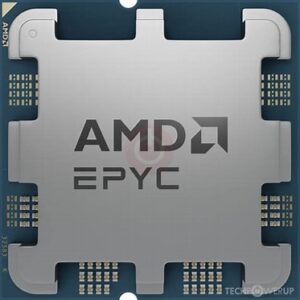

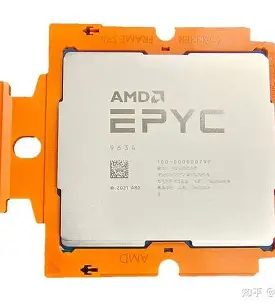

Wholesale & Distribution: AMD EPYC 4545P / 4565P / 4585PX – 64C/128T High-End Server Processors
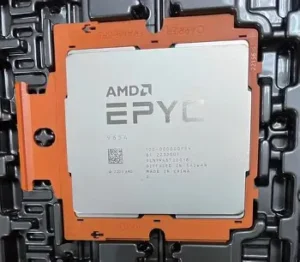
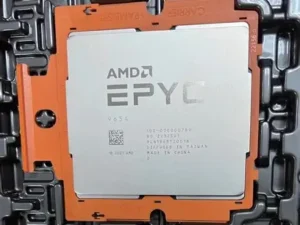
Here’s a detailed comparison table for the AMD EPYC 4545P, EPYC 4565P, and EPYC 4585PX processors, based on AMD’s latest EPYC 4004/4005 series (Zen 4 architecture):
AMD EPYC 4545P vs. 4565P vs. 4585PX Comparison Table
| Specification | EPYC 4545P | EPYC 4565P | EPYC 4585PX |
|---|---|---|---|
| Cores / Threads | 12C / 24T | 16C / 32T | 24C / 48T |
| Base Clock | 3.7 GHz | 3.5 GHz | 3.3 GHz |
| Max Boost Clock | Up to 4.8 GHz | Up to 4.6 GHz | Up to 4.4 GHz |
| L3 Cache | 64 MB | 64 MB | 96 MB |
| Default TDP | 150W | 170W | 200W |
| PCIe Lanes | 28 (PCIe 5.0) | 28 (PCIe 5.0) | 28 (PCIe 5.0) |
| Memory Support | DDR5-4800 | DDR5-4800 | DDR5-4800 |
| Memory Channels | 2 | 2 | 2 |
| Socket | AM5 (SP6) | AM5 (SP6) | AM5 (SP6) |
| Launch Year | 2024 | 2024 | 2024 |
AMD EPYC 4545P (12C/24T) – The Balanced Performer
Key Specifications:
-
Cores/Threads: 12 cores / 24 threads
-
Clock Speeds: 3.7 GHz base / up to 4.8 GHz boost
-
Cache: 64MB L3
-
TDP: 150W
-
PCIe: 28 lanes (PCIe 5.0)
-
Memory: Dual-channel DDR5-4800
Best For:
Workloads requiring strong single-thread performance with solid multi-threading capability.
Key Features:
-
Zen 4 architecture delivers excellent IPC (Instructions Per Cycle) improvements
-
High boost clocks (4.8GHz) make it ideal for latency-sensitive applications
-
Balanced 150W TDP for energy-efficient deployments
-
Large 64MB L3 cache benefits database and virtualization workloads
Ideal Use Cases:
✓ Medium-density virtualization hosts
✓ Relational databases (MySQL, PostgreSQL, SQL Server)
✓ Game server hosting (high clock speeds benefit game engines)
✓ Enterprise applications (ERP, CRM systems)
AMD EPYC 4565P (16C/32T) – The Virtualization Specialist
Key Specifications:
-
Cores/Threads: 16 cores / 32 threads
-
Clock Speeds: 3.5 GHz base / up to 4.6 GHz boost
-
Cache: 64MB L3
-
TDP: 170W
-
PCIe: 28 lanes (PCIe 5.0)
-
Memory: Dual-channel DDR5-4800
Best For:
Virtualized environments needing strong multi-threading with good clock speeds.
Key Features:
-
Higher core count than 4545P for better VM density
-
Only slightly lower boost clocks than 4545P (4.6GHz vs 4.8GHz)
-
Same 64MB L3 cache maintains strong performance per core
-
PCIe 5.0 doubles bandwidth over previous generation
Ideal Use Cases:
✓ Private cloud and hyperconverged infrastructure
✓ Virtual desktop infrastructure (VDI) deployments
✓ Mid-range Kubernetes/container hosts
✓ Video transcoding and media processing
AMD EPYC 4585PX (24C/48T) – The Thread Monster
Key Specifications:
-
Cores/Threads: 24 cores / 48 threads
-
Clock Speeds: 3.3 GHz base / up to 4.4 GHz boost
-
Cache: 96MB L3
-
TDP: 200W
-
PCIe: 28 lanes (PCIe 5.0)
-
Memory: Dual-channel DDR5-4800
Best For:
Compute-heavy workloads that can leverage massive parallel processing.
Key Features:
-
Largest core count in the EPYC 4000P series
-
Enormous 96MB L3 cache reduces memory latency
-
Higher 200W TDP allows sustained multi-threaded performance
-
PCIe 5.0 supports latest accelerators and storage
Ideal Use Cases:
✓ High-performance computing (HPC) clusters
✓ AI/ML inference workloads
✓ 3D rendering and simulation (CFD, FEA)
✓ Large-scale Java applications
✓ High-traffic web serving with complex processing
Comparative Summary
| Model | Strength | Best Environment | Power Efficiency |
|---|---|---|---|
| 4545P | High clocks | Transactional databases | ⭐⭐⭐⭐ |
| 4565P | Balanced cores/clocks | Virtualization | ⭐⭐⭐ |
| 4585PX | Max cores/threads | Technical computing | ⭐⭐ |
Upgrade Considerations:
-
From 4545P to 4565P: 33% more cores for ~13% higher TDP
-
From 4565P to 4585PX: 50% more cores but 18% higher power draw